

In partnership with

The Deep Read✍️ 📰
Something new: The Deep Read now comes in two flavors. Each month, you'll get one clinical deep dive — the stuff I'm rethinking, researching, or arguing about with other clinicians — and one that takes you inside the renovation of my 1920s farmhouse, where every design decision is rooted in how women actually sleep, move, eat, and recover. I wanted you closer to all of it.
Let’s get into it.
Your ovaries have their own nervous system. Nobody told you.
I want to tell you something that changed how I think about sleep. Not the “put your phone down and drink chamomile” kind of advice. Something deeper.
Your ovaries have their own nervous system. They have melatonin receptors. And the follicular fluid surrounding your eggs contains melatonin at concentrations nearly three times higher than your blood. Your ovaries are actively pulling melatonin in and concentrating it. On purpose. As a shield.
Melatonin — the hormone most people think of as “the thing that helps me fall asleep” — is one of the most powerful antioxidants your ovaries have. It protects eggs from oxidative stress while they mature. Your ovaries may even produce melatonin locally — the enzymes needed for synthesis are highly expressed in ovarian tissue. This isn’t incidental. It’s evolutionary design.
And women produce melatonin more robustly than men. Our peak hits almost an hour earlier. When researchers dig into why, the answer keeps pointing back to reproduction. Our bodies evolved to make more melatonin, earlier, because our ovaries need it.
So here’s where I want to think out loud with you for a minute. Because the obvious next question is: should I just take a melatonin supplement?
A 2025 randomized controlled trial found that women who supplemented with 3mg of melatonin showed better egg quality, higher fertilization rates, and less oxidative damage in their follicular fluid. The research is real. But here’s the part I’m sitting with as a clinician — and I want you to sit with it too: the same research that shows exogenous melatonin can help also warns that high doses can disrupt your circadian rhythm. And your circadian rhythm is the very system that produces your endogenous melatonin in the first place.
Think about what that means. If you take a supplement at the wrong dose or the wrong time, you could actually be interfering with the natural melatonin production that your ovaries evolved to depend on. You could be disrupting the system you’re trying to support.
I don’t have a clean answer for you on this one — and I think that’s actually the point. The studies showing benefit were conducted in specific clinical contexts (IVF, diminished ovarian reserve) with specific dosing and timing. That’s different from popping 10mg of melatonin from Amazon every night because you read it was good for you.
What I do know is this: the melatonin your body makes during deep, uninterrupted sleep concentrates in your follicular fluid at levels a supplement may not replicate. Your body knows where to send it, when, and how much. That’s not something a pill can fully mimic.
So before you reach for the bottle on your nightstand, maybe the more interesting question is: what if the most powerful thing you could do for your ovaries is simply... sleep?
Not a supplement. Not a hack. The sleep itself.
The LAiDY Edit 🤖
Each week I’m dropping one AI prompt, hack or skill you can copy, paste, and use in your real life. No tech degree required. Just one smart shortcut for women who are busy, a little bit curious, and done pretending AI isn’t for them. This is The LAiDY Edit.
The Fine Print Reader
You’re about to sign your kid up for camp. Or renew that gym membership. Or try a subscription box that looked great on Instagram. There’s a terms page. You scroll to the bottom and hit “I agree” like the rest of us. This week, don’t.
Copy this into ChatGPT or Claude:
“Here’s [the link to / the email from / a screenshot of] the signup page for [name of service]. Find the terms and conditions and tell me: What’s the cancellation policy? Is there auto-renewal? Are there fees that aren’t obvious from the pricing page? What am I actually agreeing to? Talk to me like a friend who happens to be a lawyer.”
Three ways to get the terms in: paste the URL directly into the chat (fastest), copy-paste from a signup email, or screenshot the page if you’re on your phone. All three work.
I started doing this with every new subscription and caught a $200 early-cancellation clause on something I thought was month-to-month.
Works on: ChatGPT (turn on browsing for links), Claude, Gemini — any AI chat app on your phone or laptop.
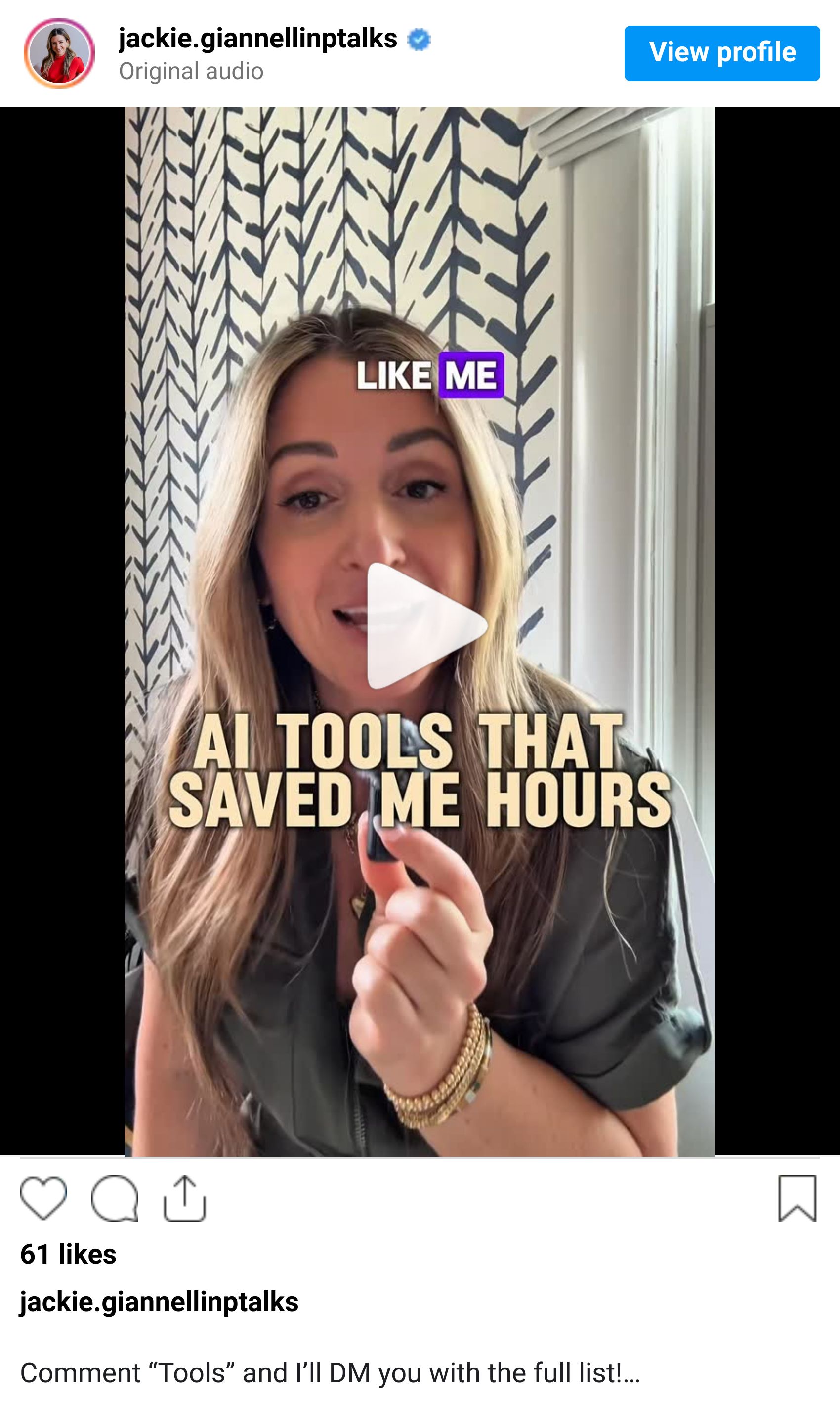
PS: Are you a clinician (or anyone, really?!) trying to find time to make content and build a personal brand? This week on IG, I broke down the tools I’m using to quadruple my productivity (like writing this newsletter for example!) and maintain my sanity.
And hey, If Claude Cowork, or just agents in general, are giving you the jitters — I get it. Dip your toe in the water with this simple talk to text AI transcription tool and give your pretty fingers a rest from the keyboard.
Worth the Click 🔗
The New York Times just asked the question I get from every new patient: What even is longevity medicine?

NYT, Kate Dehler
The answer, according to nine experts they interviewed, is that the field is equal parts promise and wild west. No board certification exists. Anyone with a medical degree can call themselves a longevity doctor. And some of what’s being sold has almost no evidence behind it.
This matters to you because if you’re spending money on your health, you deserve to know the difference between a clinician with a plan and a clinic with a marketing budget. I have a lot of thoughts on this one.
Become An AI Expert In Just 5 Minutes

If you’re a decision maker at your company, you need to be on the bleeding edge of, well, everything. But before you go signing up for seminars, conferences, lunch ‘n learns, and all that jazz, just know there’s a far better (and simpler) way: Subscribing to The Deep View.
This daily newsletter condenses everything you need to know about the latest and greatest AI developments into a 5-minute read. Squeeze it into your morning coffee break and before you know it, you’ll be an expert too.
Subscribe right here. It’s totally free, wildly informative, and trusted by 600,000+ readers at Google, Meta, Microsoft, and beyond.
The Find 🛍️
I saw a reel this week that made me immediately add to cart. A woman took her minoxidil liquid — the kind with the dropper that somehow gets everywhere except your scalp — and transferred it into a roller ball applicator. Clean application, right into the part line, no dripping down your forehead at 10 PM. Stupid simple. Absolutely genius.
If thinning hair is on your radar (and after 40, it’s on most of ours), this is the kind of low-effort upgrade that actually makes you use the product consistently. And consistency is the whole game with minoxidil.
P.S. Skip the pink tax. The women’s version is the same drug at a lower concentration and a higher price. The 5% solution marketed to men is more effective and works exactly the same on your scalp. Your hair follicles don’t know the difference.

Saddle Up & Spread the Word 🏇💨

If this made you think differently about sleep, send it to your most well-read, wellness-obsessed, or wildly curious friend. Or that one person in your group chat who takes 10mg of melatonin every night and swears it’s fine. Sharing is caring, and also excellent for karma. 💌
To share — Just click and copy this link: https://inthesaddle.beehiiv.com/
If you’re a brand, expert, or just someone with an excellent story to tell in the wellness, longevity, or sexual health space, I’d love to connect! I am always open to hearing ideas for ITS content and collabs. ✏️ 🏇🔥
With gratitude always,
Jackie Giannelli, FNP-BC, MSCP
Founder, In the Saddle
Medical Disclaimer:
The content provided in this newsletter is for informational and educational purposes only and is not intended as a substitute for professional medical advice, diagnosis, or treatment. Nothing contained herein should be construed as medical guidance or the practice of medicine. You should always seek the advice of your physician or other qualified healthcare provider with any questions you may have regarding a medical condition or treatment. Never disregard professional medical advice or delay seeking care because of something you read in this newsletter. Use of the information provided is at your own risk. No clinician-patient relationship is formed through this content.
*This newsletter may contain affiliate links. If you choose to purchase through these links, I may earn a small commission at no additional cost to you. All recommendations are my own, and I only share products I personally use or trust.